Champion enablement template
Give your buyer the internal case they need when you are not in the room.

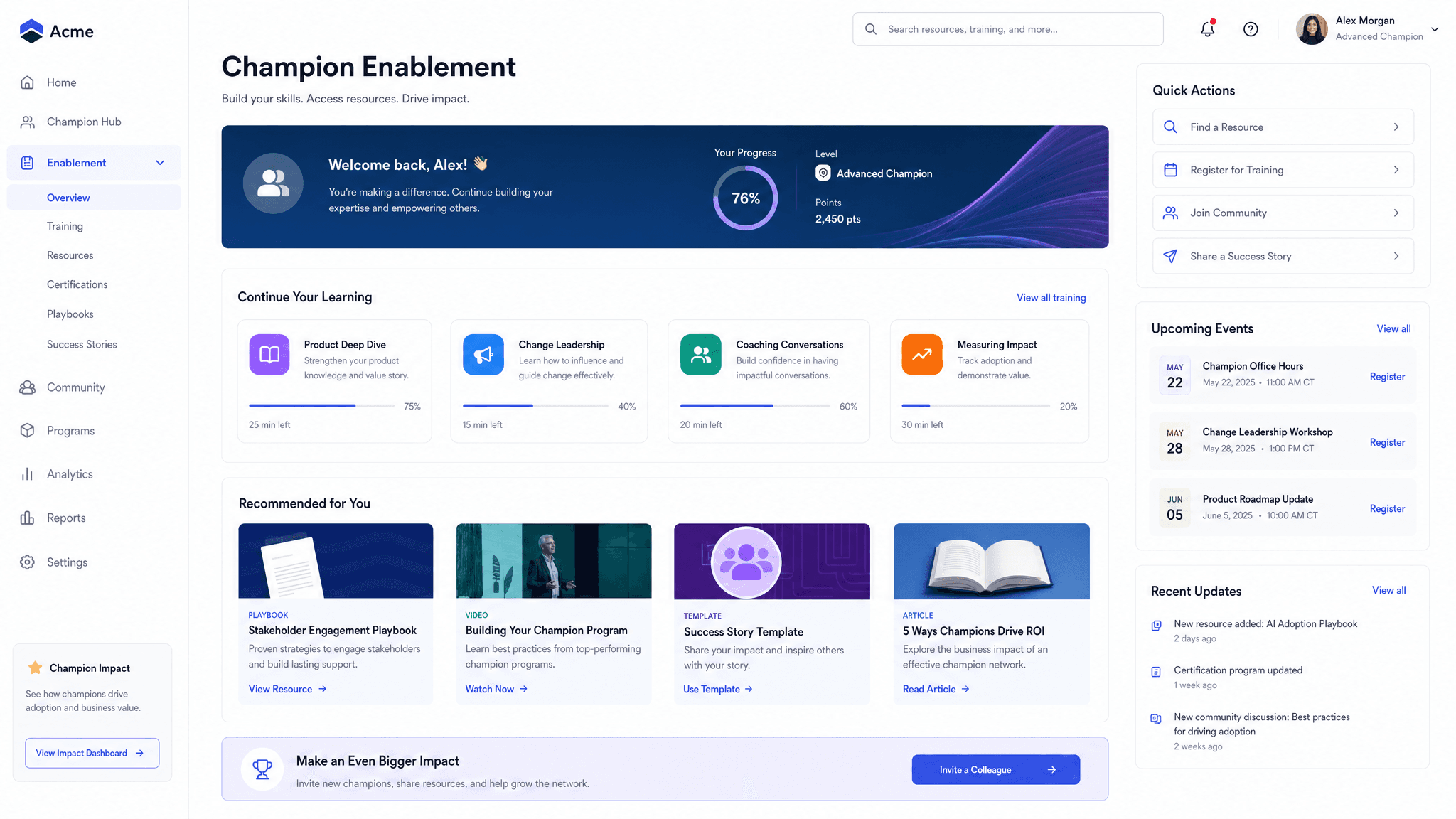
Most deals do not die because the champion forgot the demo. They die because the champion has to explain the case internally and does not have the right language, proof, or answers. A champion enablement page gives them something better than a forwarded deck.
Claude can turn call notes, objections, proof, pricing context, and stakeholder needs into a page your champion can use with their boss, finance, security, or the rest of the buying committee. Send lets you see whether that page is getting used.
What to include in the champion page
- The buyer's goal and why the problem matters now.
- A short internal summary the champion can reuse.
- Business case, impact, risks, and assumptions.
- Proof from similar customers or use cases.
- Stakeholder-specific notes for finance, technical, leadership, or end users.
- Common objections and plain answers.
- Decision path, owner, timeline, and next step.
Prompt to use in Claude
Search the registry for the Send connector. Once connected, use their "send/champion-enablement-page" skill.
How to create it with Send
Give Claude the discovery notes, stakeholder map, proposal, pricing, proof, objections, and known decision process. Ask it to create a champion enablement page using Send. The page should help the champion explain the deal internally without sounding like vendor copy.
Send gives the champion one link to forward. You can see whether other stakeholders open it, which gives you better information than waiting for a vague update after the internal meeting.
Champion enablement page structure
Internal summary
The buyer's problem, why now, and the recommendation in language they can reuse.
Business case
Impact, proof, assumptions, risk, and why the investment makes sense.
Stakeholder notes
What finance, technical, leadership, or end users need to know.
Decision path
Objections, answers, owners, timeline, and next step.
Why send champion enablement as a page
Your champion has to sell the deal when you are not there. A Send page gives them the internal case, proof, and answers in one place, and it shows whether the buying committee is actually looking at it.