Proposal template
Put the offer, scope, proof, and approval path in one page clients can forward.

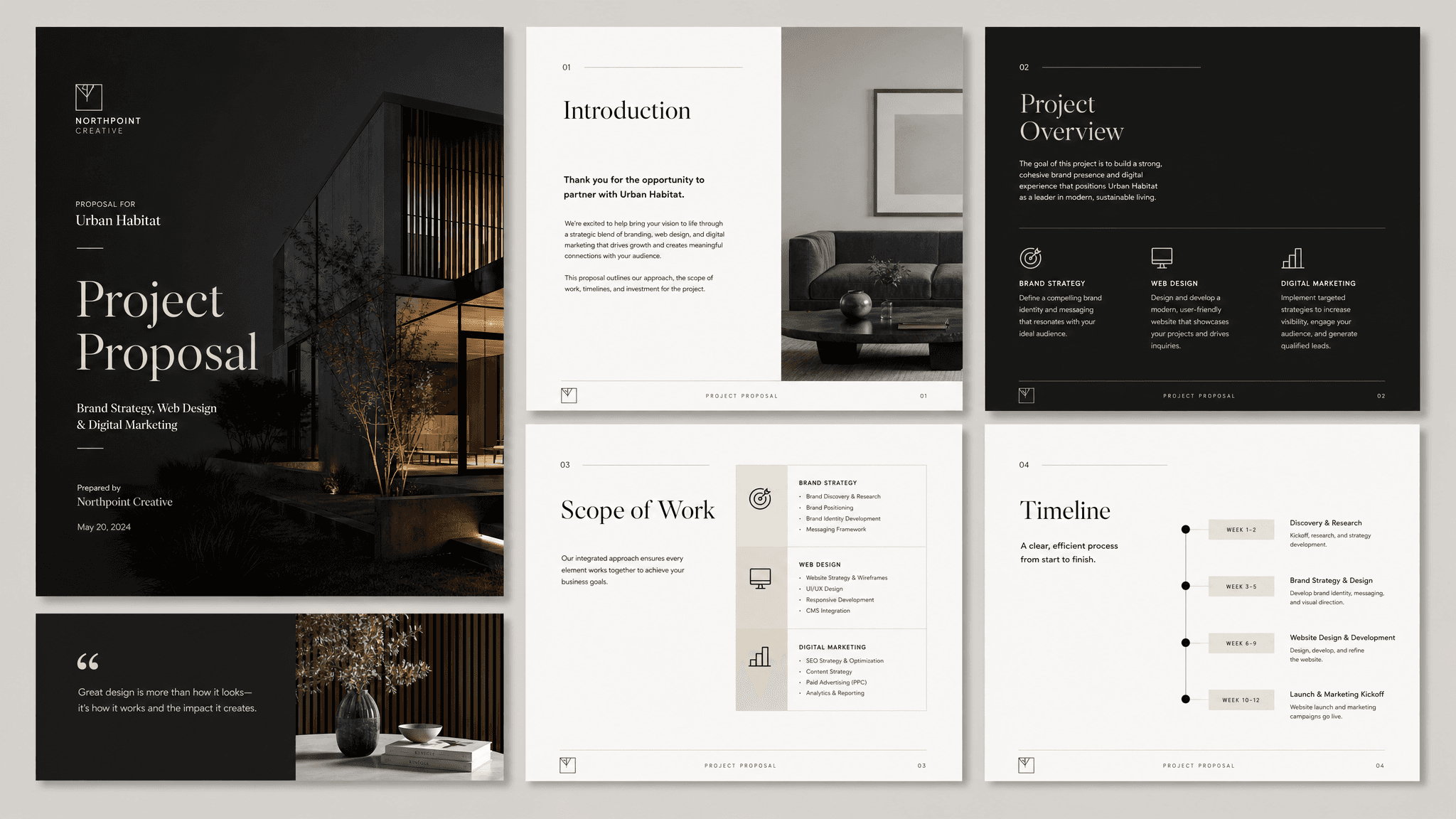
A good proposal does one job: make the offer, scope, team, and next step clear enough to approve. The format matters, but the useful part is the thinking behind it. Readers need the context, the recommendation, the proof, and the next step without having to reverse engineer your intent.
Claude can turn client notes, scope, team details, pricing, timeline, assumptions, and proof into a clear first version. Send turns that version into a live page you can share, track, and revise as the conversation changes.
What to include in the proposal
- The client need and goal.
- Your proposed approach and deliverables.
- The team, timeline, pricing, and assumptions.
- Relevant proof, examples, or case studies.
- Approval steps and what happens next.
Prompt to use in Claude
Search the registry for the Send connector. Once connected, use their "send/proposal" skill.
How to create it with Send
Give Claude client notes, scope, team details, pricing, timeline, assumptions, and proof, plus any constraints, examples, or audience notes that matter. Ask it to create the proposal with the Send connector so the output becomes a page instead of another loose document.
After you share it, Send helps you see whether clients open it, come back to it, or share it internally. You can update the same link when details change.
Proposal structure
Need
What the client wants and why now.
Approach
The work, deliverables, and team.
Terms
Pricing, timeline, assumptions, and exclusions.
Approval
Decision path, owner, and next step.
Why send a proposal as a page
A proposal can get separated from the context that made it make sense. Send keeps the offer and rationale in one page and gives you a signal when the client is reviewing it.