Event landing template
Explain why it matters and get the right people to register.

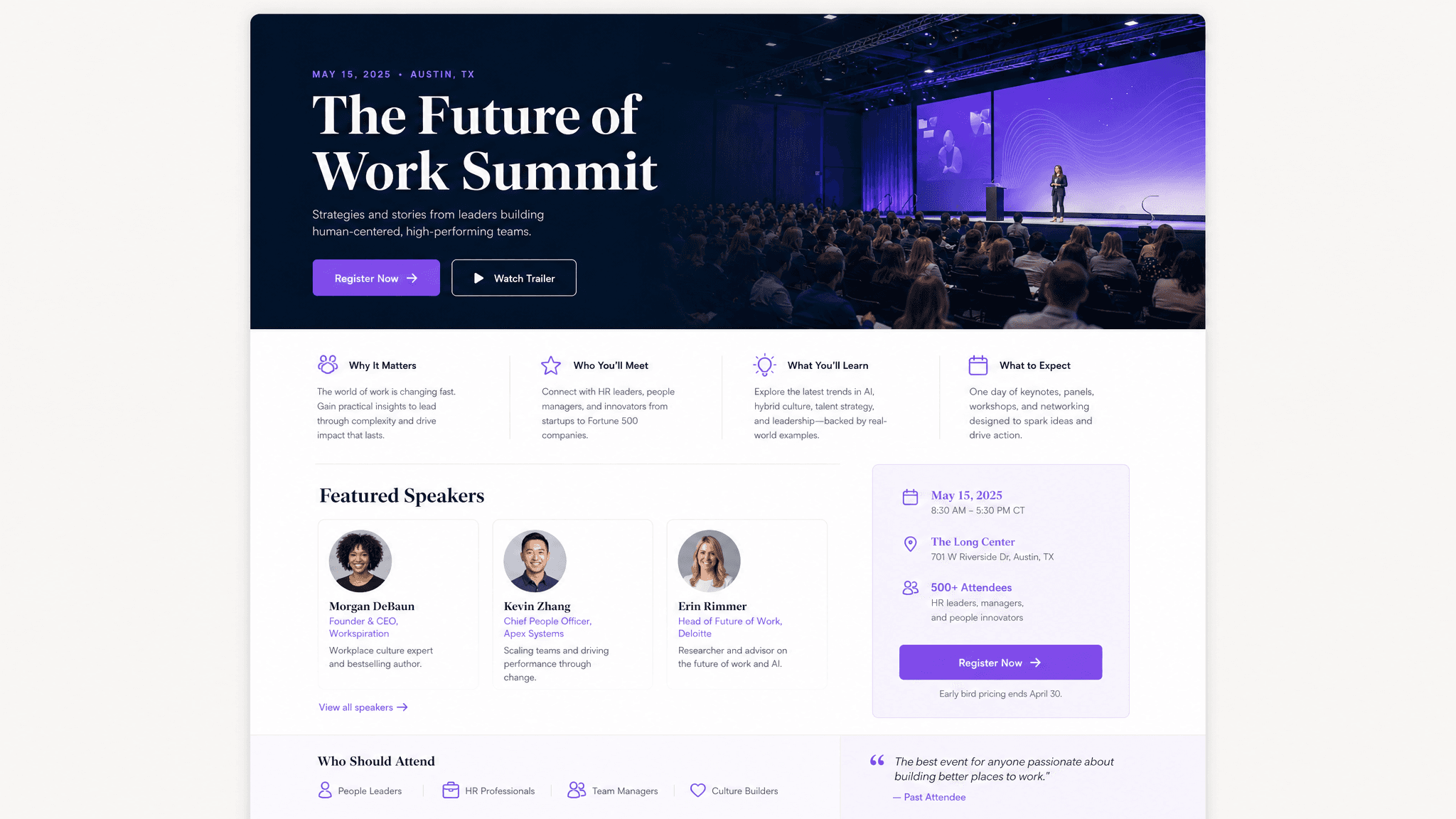
A good event landing page does one job: explain why the event matters and get the right people to register. The format matters, but the useful part is the thinking behind it. Readers need the context, the recommendation, the proof, and the next step without having to reverse engineer your intent.
Claude can turn the event's purpose, format, hosts or speakers, agenda, logistics, and how to register into a clear first version. Send turns that version into a live page you can share, track, and revise as the conversation changes.
What to include in the event landing page
- Why this event matters right now, not just what it is.
- Format, date, time, and how long it runs.
- Who's hosting or speaking, and why they're worth hearing.
- What will actually be covered or discussed.
- How to register and what happens after.
Prompt to use in Claude
Search the registry for the Send connector. Once connected, use their "send/event-landing-page" skill.
How to create it with Send
Give Claude the event's purpose, format, hosts or speakers, agenda, logistics, and how to register, plus any constraints, examples, or audience notes that matter. Ask it to create the event landing page with the Send connector so the output becomes a page instead of another loose document.
After you share it, Send helps you see whether prospective attendees open it, come back to it, or share it internally. You can update the same link when details change.
Event landing page structure
Why now
The context that makes this event worth attending.
Details
Format, timing, and logistics.
Who's there
Hosts, speakers, or panelists and their angle.
Register
How to sign up and what to expect next.
Why send a event landing page as a page
An event page has to convince someone to block time on a calendar. Send keeps registration details current in one link and shows you who's actually engaging before the date arrives.